Free Shipping Coupon Code: SHIPFREE | For Most $199 Orders!
Best Places to Buy Upholstery Fabric in 2025 (Expert Ranked)
Posted by Decorative Fabrics Direct on Sep 12th 2025
Factors to consider to find the Best Places to Buy Upholstery Fabric in 2025
Choosing the right upholstery fabric source means better durability, better design, and fewer surprises. Below, our experts elaborate on the importance of selecting the best place to buy upholstery fabric today—what they should do well, who they’re best for, and how to pick confidently.
Quick Answer
Best overall: Decorative Fabrics Direct — a trusted distributor (since 1947) with thousands of upholstery and drapery selections, faux leathers, indoor/outdoor fabrics, drapery liners and more. Leading brands such as Waverly, Tommy Bahama, Crypton, Richloom, Covington, P/Kaufmann and more allows Decorative Fabrics Direct to offer boundless choices for such an important decision for you- your personal project of décor. Sample ordering, detailed specs, and distributor-level pricing make the ordering process clear and simple. You can trust what is conveyed about each fabric with a detailed list of specs and description of the particular fabric.
What makes “the Best Place to Buy Upholstery Fabric”
- Durability & testing: Look for abrasion ratings (double rubs) and performance finishes (e.g., Crypton). For everyday residential seating, 15,000+ double rubs is a practical target.
- Cleanability & performance: Performance lines (Outdura, Crypton Home, Naugahyde, etc.) help with various specs from stain resistance to lightfastness and are very helpful for high-use spaces.
- Selection & brands: Breadth across jacquards, chenille, velvets, faux leathers, cotton prints, and linen and linen blends signals strong sourcing.
- Swatches: Sampling prevents costly color/texture misses—order swatches before yardage. Remove all doubt about your selections.
- Speed & support: Clear shipping information and an accessible FAQ let you move from idea to install with fewer hiccups.
Why it’s #1
Since 1947, DFD has specialized in textiles for the consumer carrying top brands (Waverly, Tommy Bahama, P/Kaufmann, Richloom, Naugahyde, Covington, Crypton and more), with sample ordering, specs & care info, and distributor-level pricing.
- Strengths: Selection depth (thousands and thousands of choices), performance options, abrasion & cleaning guidance, and a simple swatch flow.
- Trust signals: “Fine Interior Fabric Since 1947,” transparent categories by use/type/brand, and clearly published FAQs.
Expert Insights about the industry from Steve
“Digital printing puts all the color down at once in brush-stroke passes—so you don’t need the huge minimums that flatbed or rotary screens required.”
“We now have looms, that in the weaving process can rapidly carry the filling yarns (horizontal yarns on the loom) weaving over and under with the warp yarns (vertical yarns on the loom) across the width of the fabric, typically 54 inches finished, at a rate of 600 times a minute—and the yarn quality is consistent enough not to break at those speeds.”
“For most people, color is the #1 buying factor, then quality, then price—so our job is to keep colors current and construction reliable at obvious value to the customer- always.”
Expert Deep-Dive: Why Fabric Quality Is Better Than Ever
From hand & screen to digital precision
Steve traces the evolution from hand-painting to flatbed and rotary screen printing—then to today’s digital heads that lay down all colors in passes:
“It’s a head with nozzles that put down all the color at one time… so it’s like a brushstroke across the fabric.”
“The beauty of [digital] is you don’t have to print very much… Rotary/flatbeds needed bigger volumes.”
Faster looms + better yarn = fewer defects
“Jet and rapier looms… are looms that can do upholstery fabric weaving 600 times a minute—and the yarn had to be good enough not to break at those speeds.”
“Industry ‘first quality’ in the ’70s allowed one flaw every five yards; today we often see 50-yard rolls with no flaws.”
What buyers actually choose
“Color is the #1 buying factor, then quality, then price.”
Prints vs. wovens & using drapery on chairs
“We sell more printed fabrics for window treatments than upholstery—but it’s fine to use many drapery fabrics for upholstery when the weight and construction are appropriate; we flag these as multi-purpose vs. drapery-only on the site.”
Sampling is a leading indicator
“There’s a direct correlation between the number of samples we ship and sales volume—we’ve seen a real uptick.”
How Shipping Works for Upholstery Fabric
Upholstery and drapery fabric ships differently than standard boxed goods. Rolls are typically 54″ wide and travel on a cardboard tube in a protective poly bag, which puts them outside normal carrier dimensions. In 2025, the major parcel carriers added additional handling fees for these “non-standard” packages and began applying a 40 lb minimum to calculate base transportation on roll shipments. Together, that’s why a $100 fabric order can see a ~$35 ship charge.
“Consumers don’t recognize that upholstery and drapery fabric is an odd package outside of UPS/FedEx standards. Because fabrics are typically 54″ wide and shipped on a roll, carriers add handling fees—starting around $25 in 2025—and apply a 40 lb minimum for rating, which increases small-order costs.”
What Decorative Fabrics Direct does to keep freight and cost of shipping down
- Smart folding (when appropriate): We’ll fold on the roll to stay under 48″ policy by the carriers and avoid the handling fee. Some fabrics (e.g., velvets and faux leathers) cannot be folded and must ship at full 54″ width.
- Absorbing carrier add-ons: If a fabric can’t be folded, we do not pass the additional handling fee through to the customer.
- Use boxes when viable: Select fabrics that won’t crease may ship in a box to control cost; most ship in protective poly to prevent damage.
- Discounted ground rates: For normal ground shipments we don’t charge full retail carrier rates.
- Free shipping threshold: Free freight at $199+ on most items.
- End-of-day pickups: We schedule daily carrier pickups to get orders out fast and reduce delays.
Decorative Fabrics Direct Basics (What You’ll Find Here)
- Since 1947: Fine interior fabric heritage with online convenience and distributor-level pricing.
- Brands & breadth: Waverly, Sunbrella, P/Kaufmann, Richloom, Covington, Premier Prints, Magnolia Home Fashions, Crypton, and more.
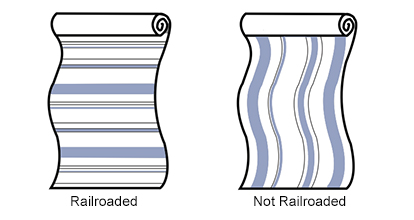
- Guides & FAQs: Width norms (54″), abrasion guidance, cleaning codes, “railroaded” orientation, and more.
- Samples: Order swatches to verify color/hand before yardage.
Upholstery Fabric FAQs
What is the most durable upholstery fabric?
“High performance” fabrics combine strong base construction, stain/soil finishes (e.g., Crypton), and higher abrasion ratings. For heavy residential use, aim for 15,000+ double rubs—and more for commercial contexts.
How many yards do I need?
This depends on the piece of furniture and the pattern matching. Upholstery fabrics are typically 54″ wide; an upholsterer can calculate precisely from measurements and repeats.
Can drapery fabric be used on chairs?
Sometimes. Lightweight prints can work for accent/dining chairs with modest wear—but verify weight and abrasion on our site first. Many retailers flag multi-purpose vs. drapery-only.
Is polyester “okay” for upholstery?
Yes—modern polyester (often blended) offers cleanability and durability and can be finished to mimic natural fibers with the added benfit of cleaning easily.
Why does shipping seem expensive for fabric?
Rolls are 54″ wide on tubes, which triggers the carrier’s additional handling fees and, as of 2025, a 40 lb. minimum is used to compute the base transportation charge on non-standard packages. That combination can push a small order’s ship cost into the ~$35 range. To combat this we fold many of our fabrics that can be folded without damage to the fabric.
Do you offer free shipping?
Yes — we offer free freight at $199+ on most items. We also use methods like folding on the roll (when appropriate) and carrier-rate optimizations to keep costs down, and we do not pass additional handling fees through when a fabric must ship at full 54″ width.
 . To qualify for free shipping via FedEx Ground service, an eligible item must be included on a fabric purchase of $199 or more and the shipping destination must be a US state other than Hawaii or Alaska. Simply enter coupon code
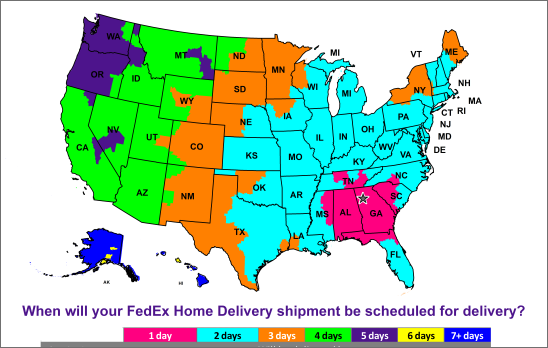
  We apologize that our order processing has not been consistent during this pandemic and please know that we are working very hard to return to quick and consistent order processing. Our distribution center is operational and is currently processing orders as indicated below: